Planting / A garden in motion
The prairie border.
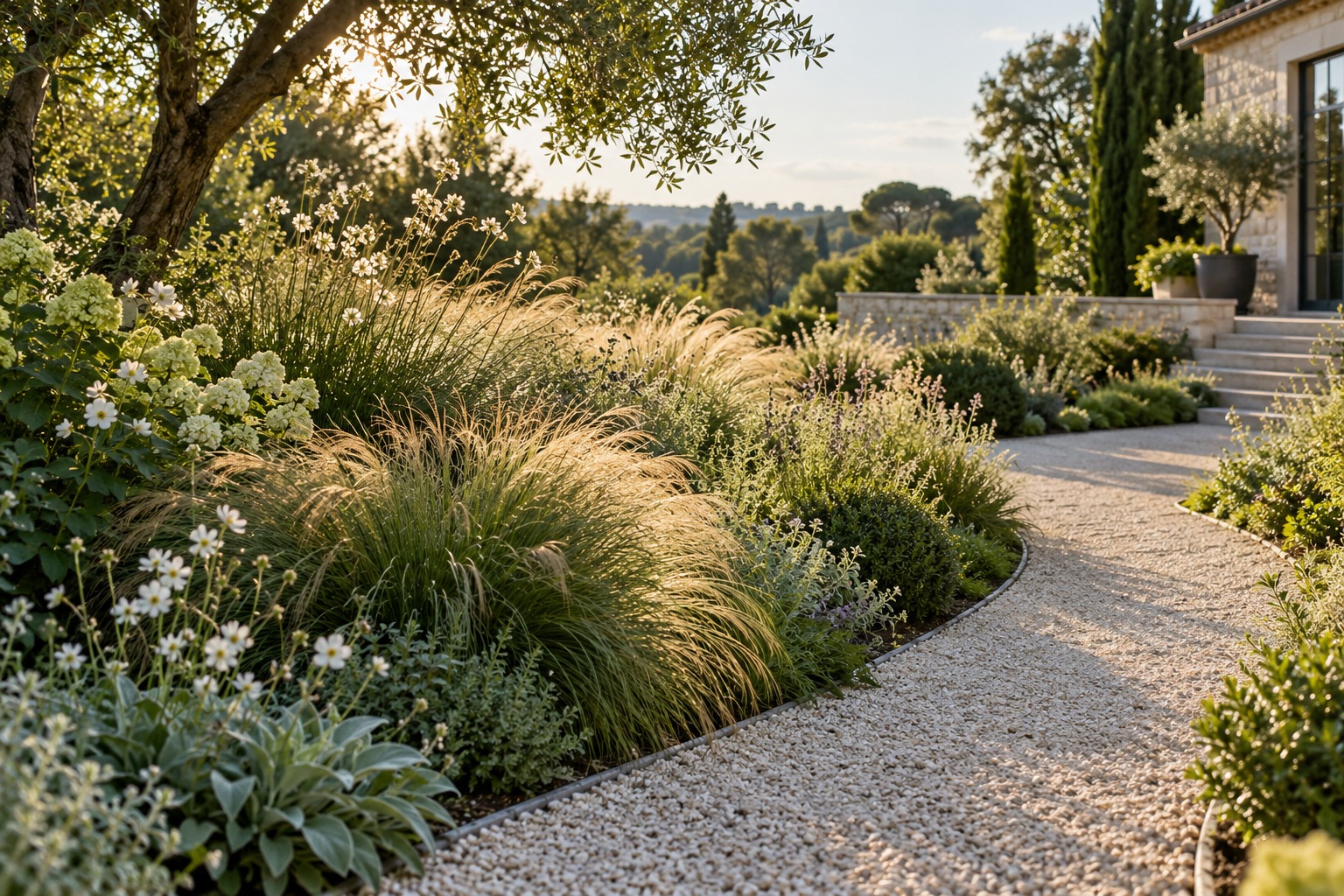
A garden that catches the breeze. Grasses and flowering perennials gather beside a gently curving path, bringing movement to an open space without losing the clarity of its layout.
Garden type
Open residential border
Design scope
Circulation and planting
Material direction
Gravel and restrained edging
Care approach
Seasonal planting review
Give openness a sense of direction.
An open garden can offer wonderful light and still feel difficult to inhabit. Without a route or a sequence of views, planting becomes something seen from the edge. This scheme brings the walk into the border, making the changing texture of the plants part of the experience.
The curved path establishes the structure. Its line is deliberate but unhurried, leaving generous planting pockets on either side. Repeated groups connect the near and distant views; occasional upright forms give the eye a place to rest. The intention is a readable composition that allows individual plants to move naturally.
Build repetition into the planting
Repeating a limited selection of grasses and perennials creates continuity. Flowering periods, foliage texture and winter structure all belong in the planting plan. Final species selection depends on soil, drainage, exposure and local suitability; the visual direction alone is not a planting specification.
Keep the route comfortable
The path should remain useful when plants reach their mature spread. Set plants back from the walking edge, allow room at bends and choose a surface appropriate to the people who will use it. Loose gravel is not suitable for every access requirement; a firmer surface may be the better choice.
Natural in character. Deliberate in detail.
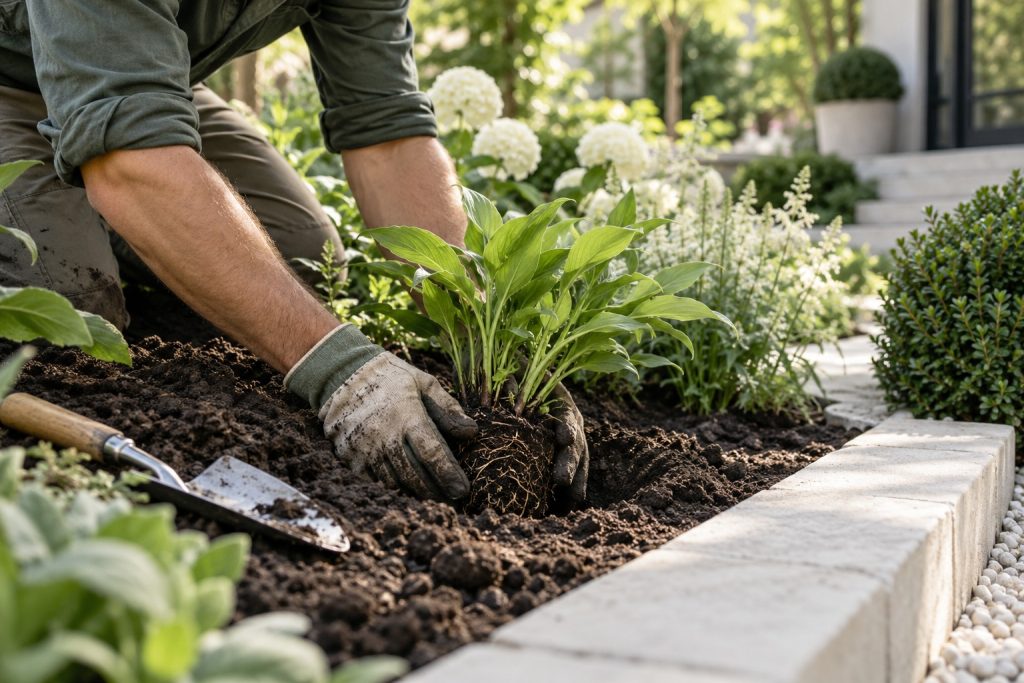
The looseness of the border depends on careful preparation. Resolve perennial weeds before planting, understand the existing soil and avoid adding amendments by habit. Plants need conditions that suit them, not simply a richer planting hole.
A discreet edge separates the path from the beds and helps retain the chosen surface. Its construction, foundation and drainage require a site-specific detail. The material palette stays quiet so that foliage and seasonal light remain the focus.
Set out the plants before digging. Reviewing groups from the path and from the house makes it easier to adjust the rhythm while changes are still simple.
Let the seasons remain visible.
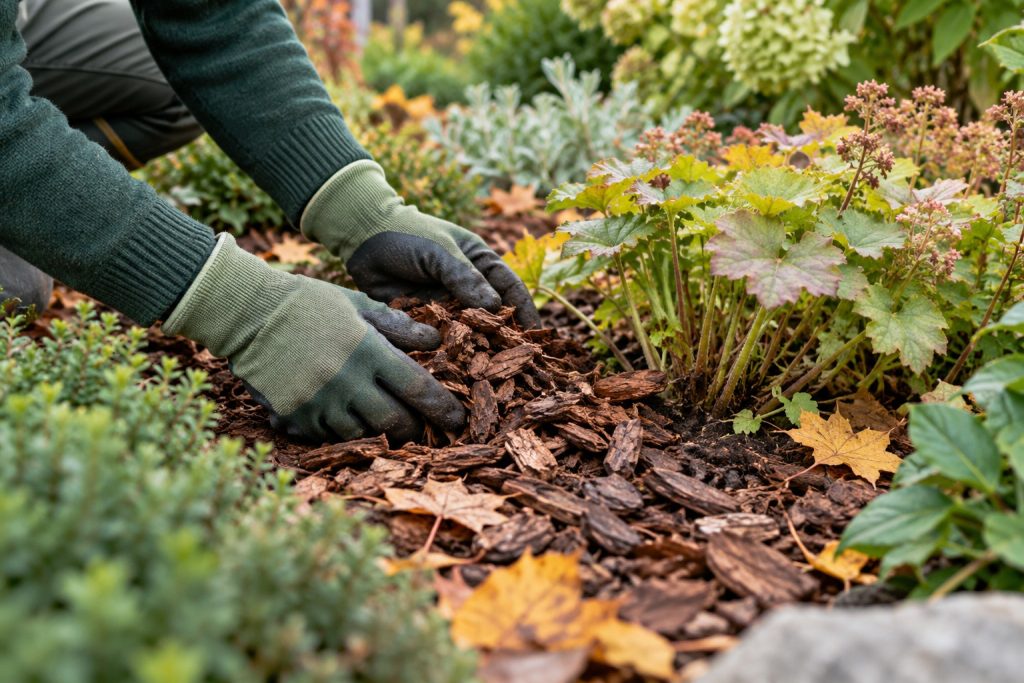
A naturalistic border still needs informed care. The aim is to guide the planting as it matures, allowing useful structure to remain while preventing a few vigorous plants from taking over.
- Monitor moisture during establishment and water according to actual conditions.
- Identify unwanted seedlings early, before they become difficult to separate from the planting.
- Retain healthy stems and seed heads where appropriate; cut back according to the needs of each plant.
- Review crowded groups and divide or reposition plants at a suitable time.
- Keep the path clear and redistribute displaced surface material where needed.
A seasonal review records what thrives, what struggles and where the composition needs adjustment. The planting plan can evolve without losing its original rhythm.
Make room for a different kind of garden.
Whether you have a single border or an open plot, we begin with its conditions and the way you want to use it. Tell us what you would like to explore.