Start with conditions, then character.
A successful planting plan begins below the surface. Soil texture, drainage, exposure and available light shape the selection before colour enters the conversation. Existing roots and the space needed for mature plants also belong on the plan.
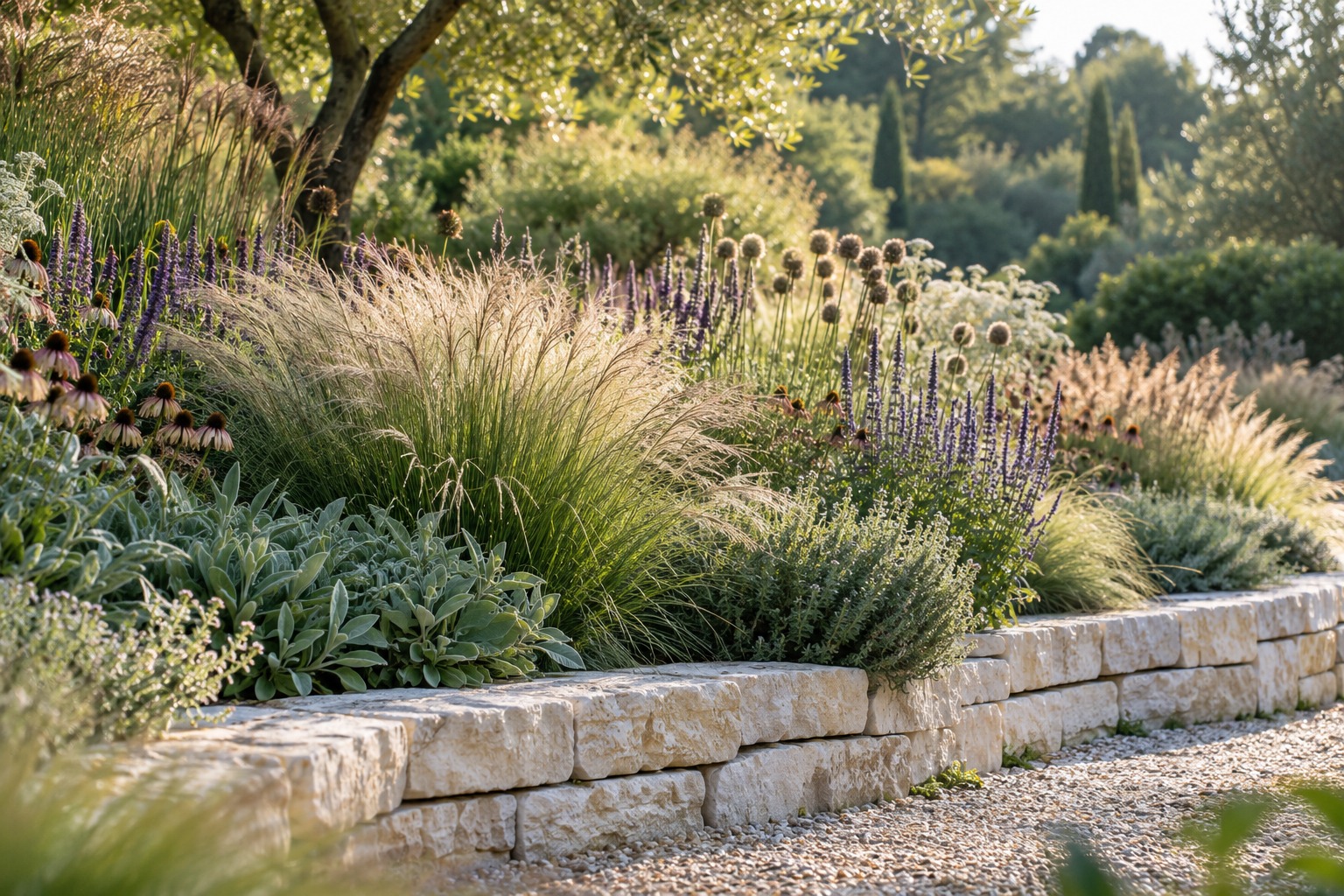
The visual approach here is repetition with variation. Grasses establish a recurring shape, while flowering perennials introduce a softer change of height and colour. Leaving room between young plants allows the composition to develop without immediate crowding.
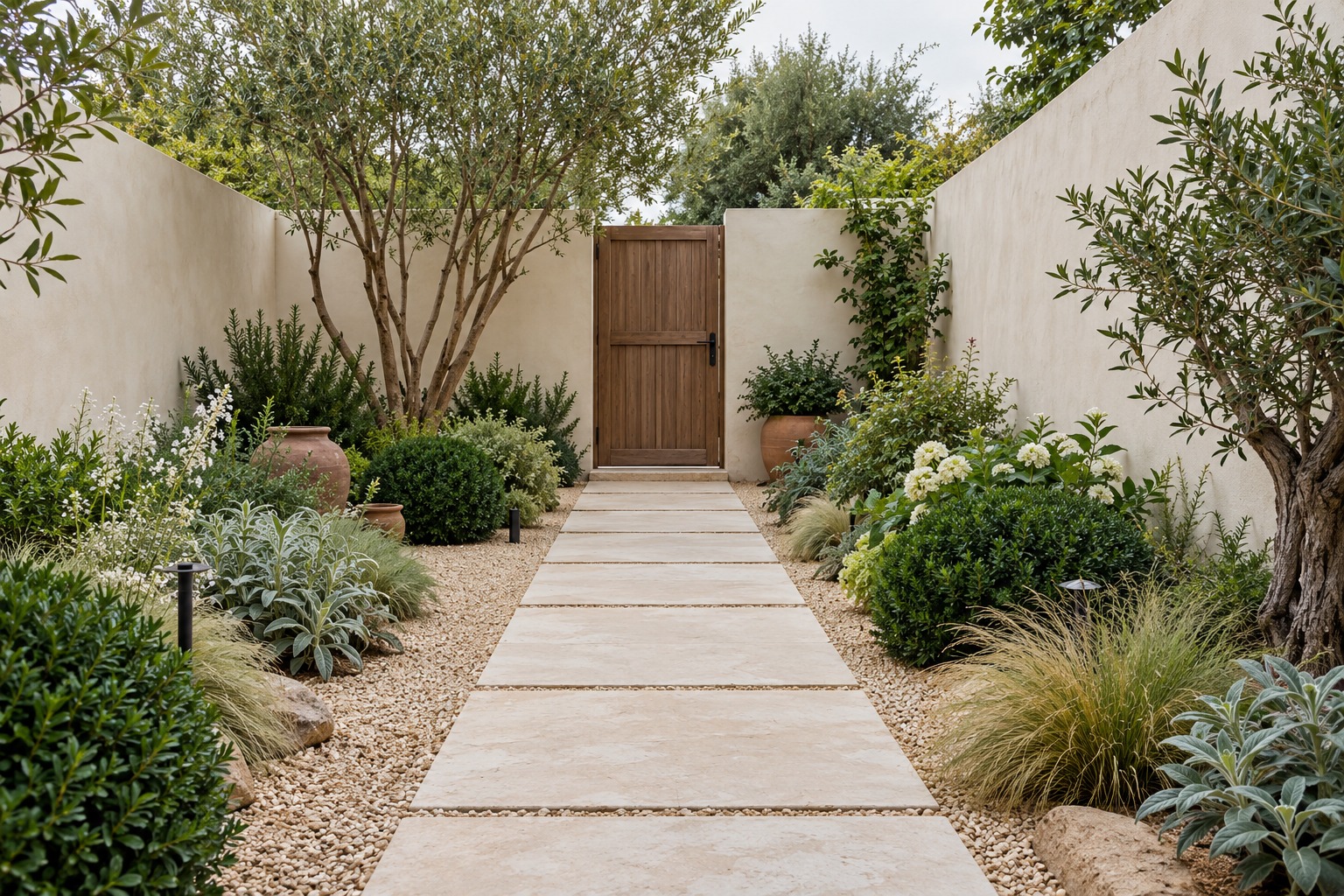
The stone edge gives the planting a clear boundary. Plants can soften its appearance without obstructing the walking route. Final spacing should account for mature spread, access and the practical work of weeding and dividing.
This concept explores a planting direction rather than documents a completed client commission. A site assessment and an agreed plant schedule are needed before applying it to a real garden.
Care follows the planting.
During establishment
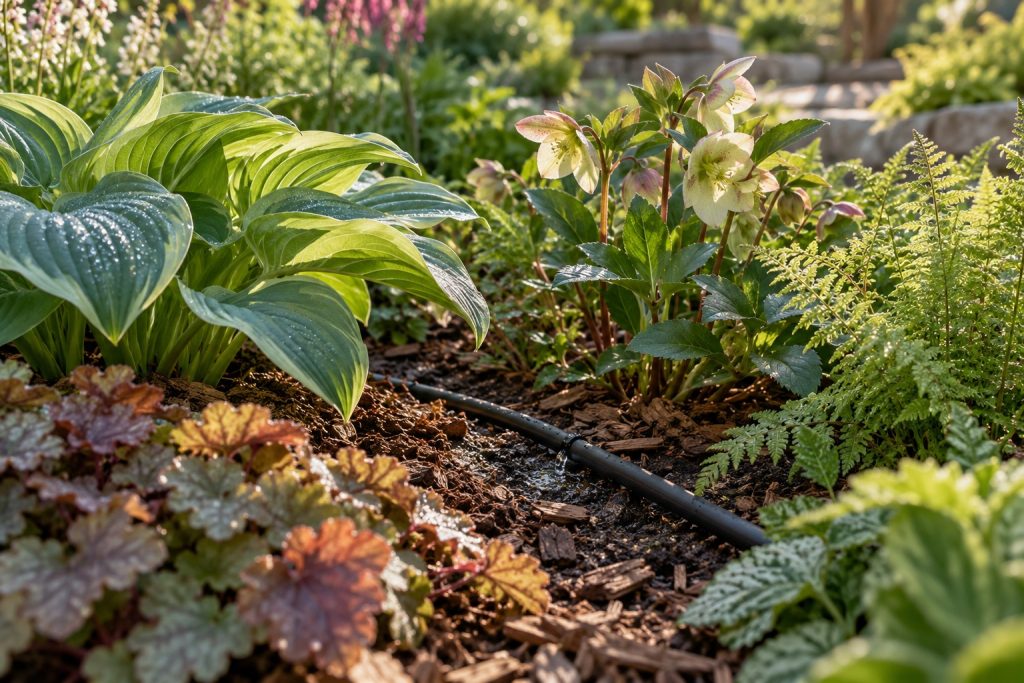
Check moisture around the rootball and in the surrounding soil. Water according to the actual conditions rather than a fixed calendar. Keep mulch away from plant crowns, remove competing weeds and watch for plants that need adjustment.
Through the growing season
Observe how neighbouring plants meet as they develop. Keep the path clear, remove damaged growth and record where gaps or crowding appear. A small adjustment at the right time can be more useful than a wholesale replant.
As the season turns
Some standing stems and seedheads retain useful structure after flowering. Cutting-back decisions depend on the plant, weather and site conditions. Review the border before clearing it, and agree a care schedule that suits both the planting and the household.
Compare seasonal care options or explore planting design.