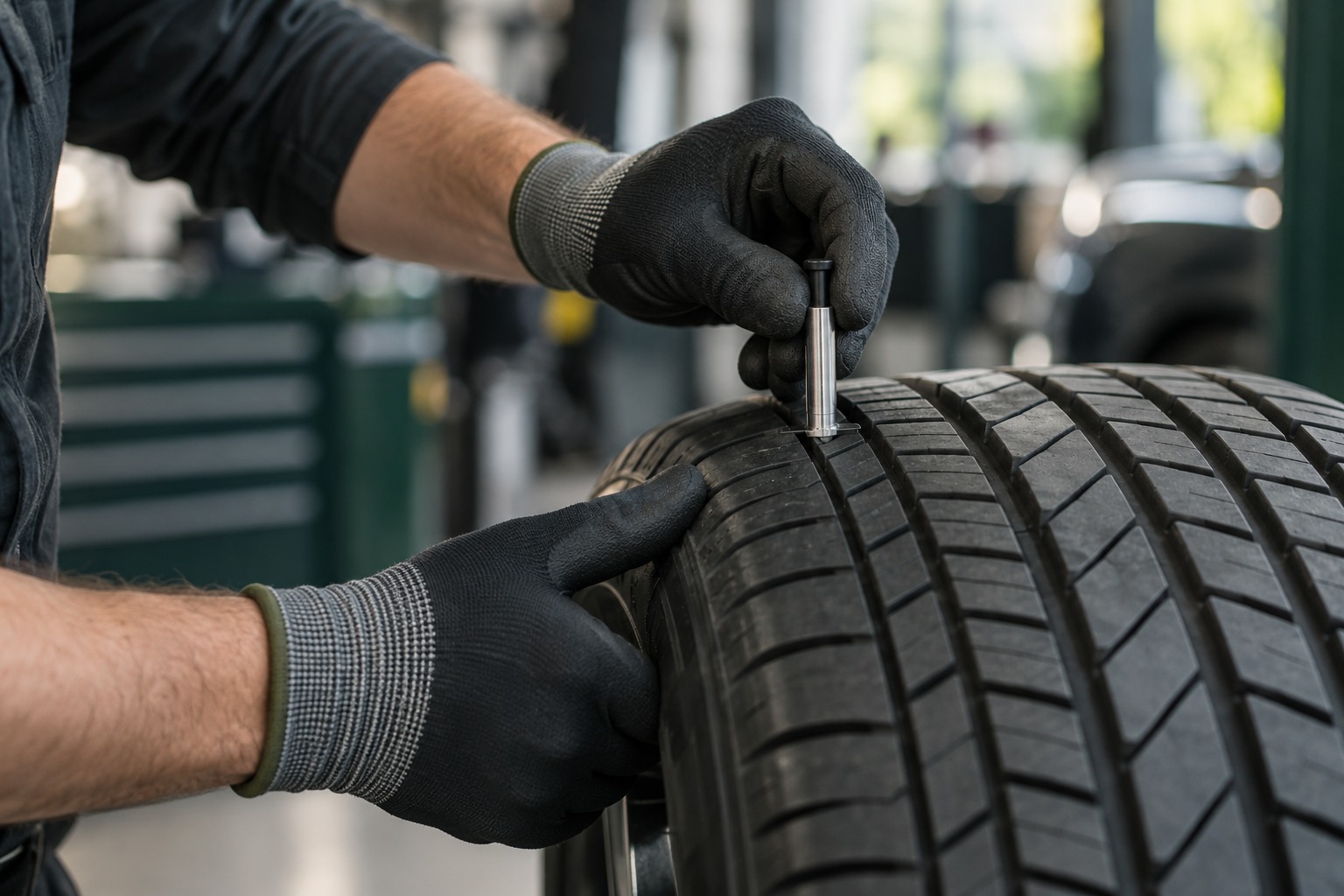
A quiet moment before a journey is a useful opportunity to notice changes in your vehicle. You do not need to diagnose a problem yourself. A clear description of what you have seen or felt gives the workshop a better starting point.
Start with the vehicle information
Find the tyre information supplied for your particular vehicle. The handbook and the vehicle’s information label are the starting points for pressure guidance; the number moulded into a tyre is not a substitute for the manufacturer’s recommendation. Loading and driving conditions can affect the guidance, so use the instructions that apply to your journey.
Look without putting yourself at risk
Park somewhere safe, switch the vehicle off and walk around it. Look for an obviously deflated tyre, a cut, a bulge or something caught in the tread. Do not reach under a vehicle or move into traffic to inspect it. If something appears damaged, seek professional advice before continuing.
Describe changes clearly
A vibration, a repeated pressure warning or a new pulling sensation is worth mentioning. Note when it occurs, whether it is new and whether anything changed recently. Avoid trying to reproduce a worrying symptom on the road just to gather more detail.
Bring the questions with you
Ask the technician to explain the inspection findings and any proposed next step. The useful outcome is a clear understanding of the condition of your tyres, what needs attention and what can be monitored. An online request starts that conversation; it does not replace an inspection.