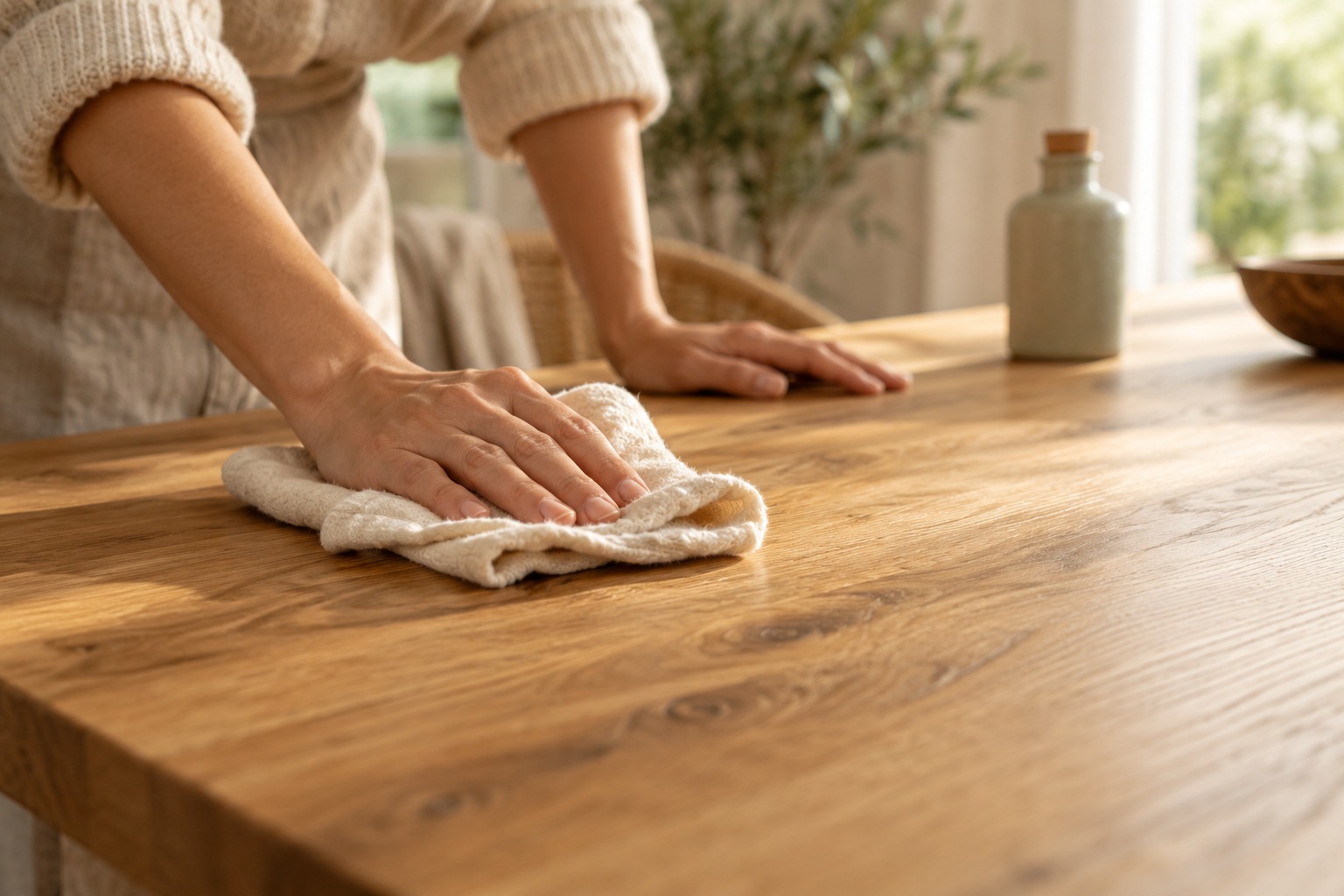
Timber brings pattern and warmth into a room. Looking after it begins with identifying the surface, rather than choosing a bottle labelled wood care and hoping it suits every piece.
Separate material from finish
Solid timber, veneer and a wood-effect surface describe different constructions. Oil, wax, paint and lacquer describe finishes. Both pieces of information matter, and a photograph cannot reliably establish either. Keep the manufacturer’s instructions with your purchase record and ask for clarification if the specification is incomplete.
Make dusting a gentle habit
Use a clean, soft cloth and avoid dragging grit across the surface. Follow the manufacturer’s instructions about damp cleaning, and dry the surface afterwards where appropriate. Wipe spills promptly instead of allowing liquid to sit around joints or edges.
Protect the table from hot dishes and moisture with suitable mats and coasters. Check the undersides of decorative objects before moving them across the top. A rough ceramic base can mark a finish even when the object itself feels light.
Consider where the piece lives
Direct heat and strong sunlight can affect furniture. Follow the supplier’s placement advice, keep pieces clear of heat sources and consider how sunlight falls across the room during the day. A covered area may age differently from an exposed one, so ask the supplier about the particular timber and finish rather than expecting an unchanged colour.
Pause before adding a treatment
Oil is not a universal remedy for a dull surface. Applying an incompatible product can change appearance or complicate later repairs. Avoid abrasive pads, strong solvents and unapproved polishes. If maintenance treatment is required, use the specified product and method.
For a mark or scratch, describe the problem to the merchant before sanding or refinishing. Include the product identification and finish information. A repair method suitable for solid timber may be inappropriate for a thin veneer or coated surface.
Keep the guidance specific
These are general starting points, not a maintenance schedule for every timber product. The actual care instructions supplied with your furniture take priority. Our fictional catalog does not establish a tested material or coating specification.
Explore the material library for upholstery and metal guidance alongside wood care.