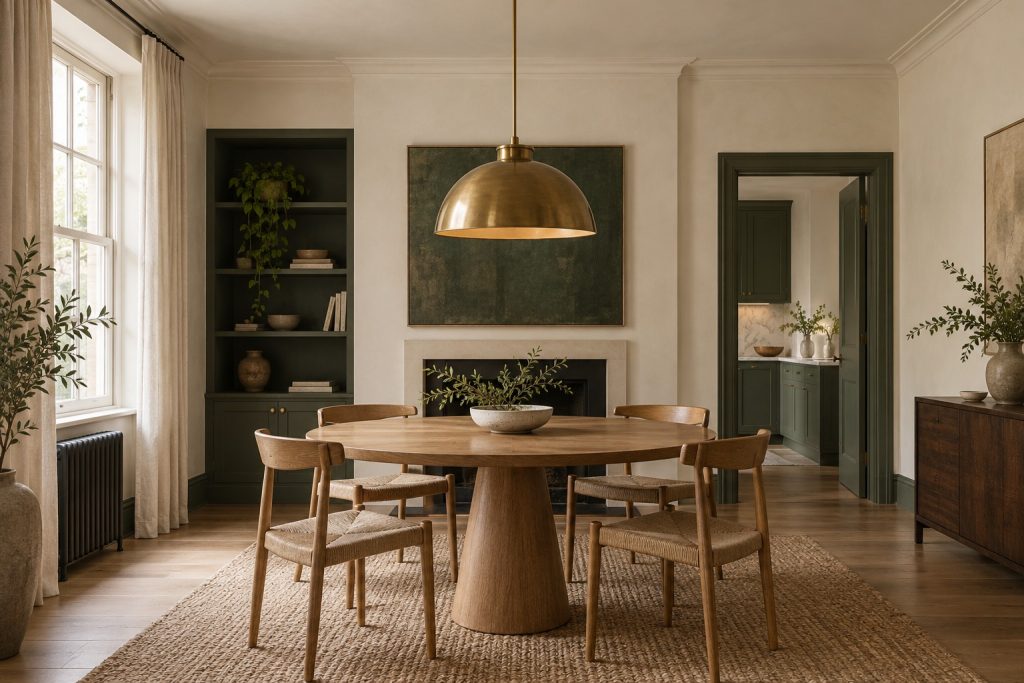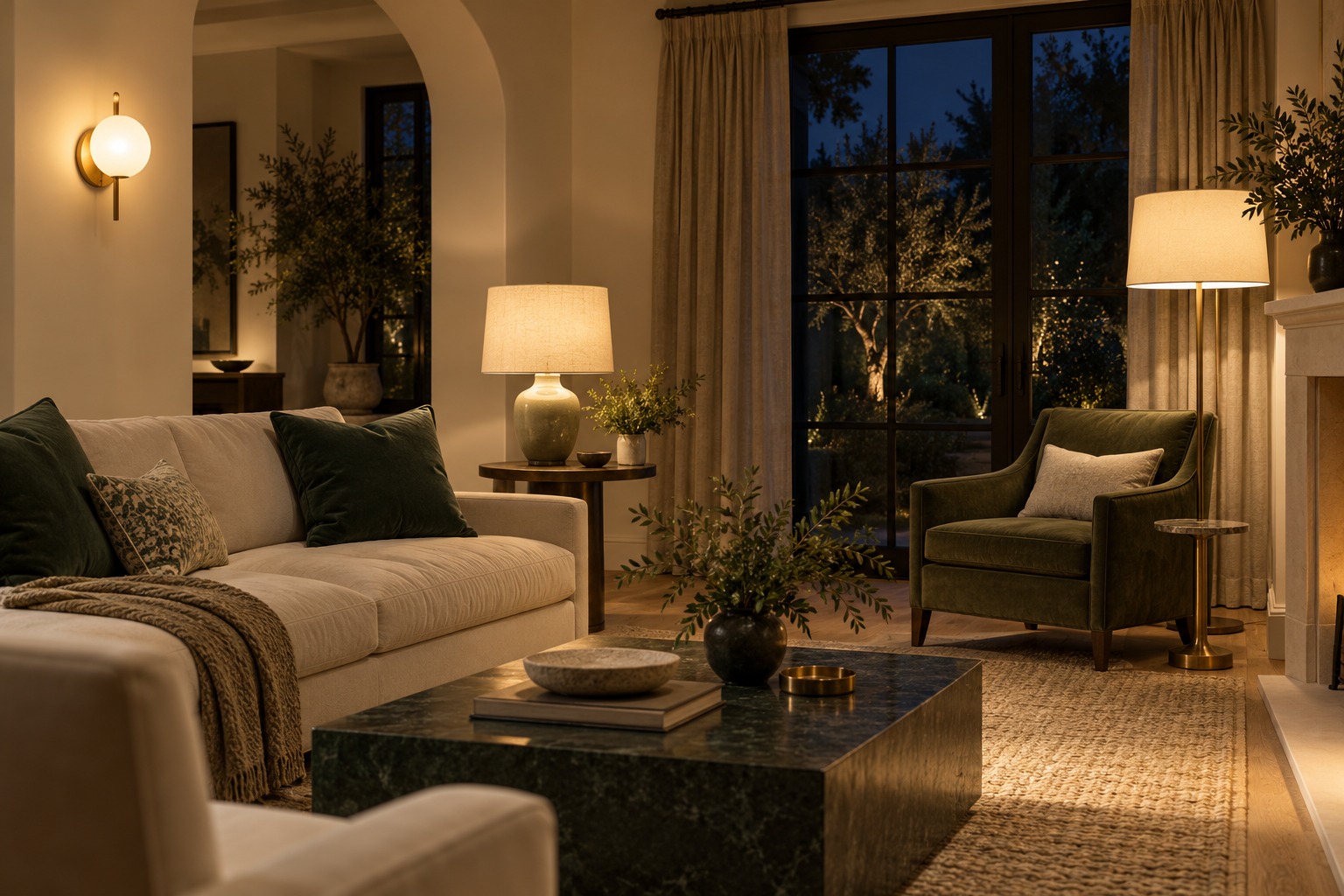
A room changes purpose throughout the day. Reading, conversation and a quiet evening rarely ask for exactly the same atmosphere. Several thoughtfully placed lights let the room adapt without requiring every fixture to be on at once.
Build a comfortable background
Ambient light establishes the overall feeling. It may come from a ceiling fitting, reflected wall light or several smaller sources. Start by noticing where the room feels dark and where existing light already works well. Avoid filling every shadow simply because it is there.
Bring light to the activity
Task lighting belongs near what you are doing. A floor lamp beside a chair or a table lamp near a writing surface can define a useful corner. Consider the shade and your seated position together, checking that the source does not sit uncomfortably in your line of sight.
Furniture placement matters as much as fixture choice. Make space for a stable base and plan a suitable power connection without trailing a cable across a walkway. Follow the instructions for the actual product and seek professional advice where installation is needed.
Add a quieter point of interest
Accent light can draw attention to a shelf, a textured wall or an object you enjoy. It need not be the brightest element. A small glow at the edge of the room can create depth and help balance a central pendant.
Make the controls useful
Think in groups of activities. You may want the reading light independently controlled from the main room light. If dimming is important, confirm compatibility between the fitting, light source and control before purchase; appearance alone does not establish compatibility.
Review the whole composition
Stand at the doorway after dark and look across the room. Then sit in each regularly used place. Notice reflections in screens and glass, exposed light sources and corners that need attention. Adjust positions before adding more pieces.
Our room guide connects these ideas to living, dining and reading spaces. Begin with one useful layer, then build a composition that suits your routine.