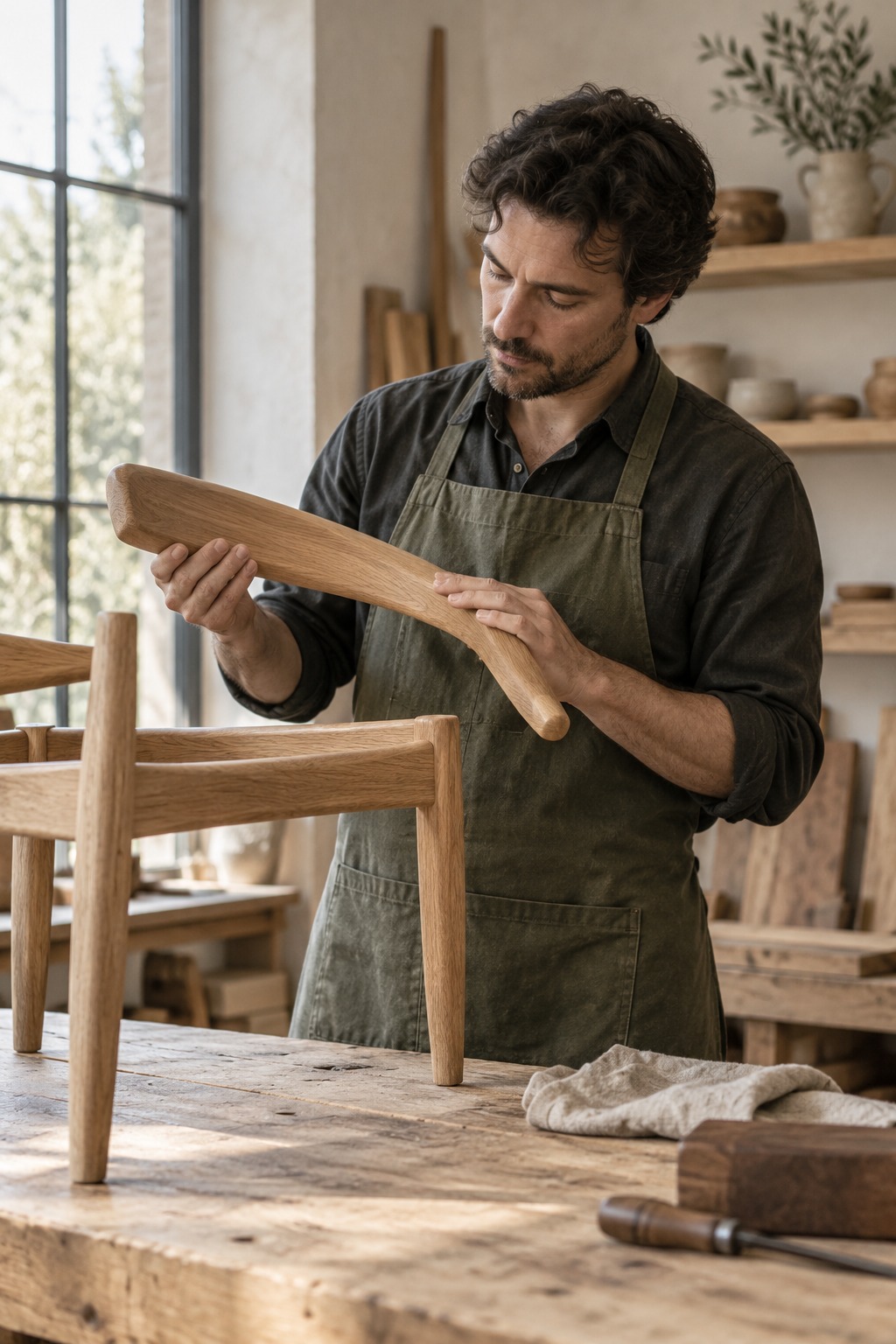
The first impression of furniture often comes from its outline. Everyday familiarity comes from smaller details: the edge under your hand, the way a handle is reached and the space around an armrest.
Follow the points of contact
When looking at a chair, consider where your hands rest as you sit and stand. Look at the relationship between the arm, seat and frame. A photograph can show the form, but comfort is personal; take time to sit in a piece when you have the opportunity.
The Studio lounge chair brings an open oak frame together with woven upholstery. Its arm-to-leg joint is a useful place to look closely at how two surfaces meet.
Look at edges in context
A rounded table edge changes the silhouette and the feel of the surface. It does not remove the need for enough space around the table. Consider both the shape and its position along the route through the room.
Ask practical questions about construction
Identify the assembly required, the fittings supplied and the access needed for maintenance. Keep the product instructions with the item details so they are available when you move home or need to check a component.
Keep care connected to the product
A finish should be understood before it is treated. If a mark or loose component appears, record the product reference and ask for item-specific advice. Similar-looking materials and fittings can require different approaches.
Bring these questions to your next showroom visit. They help turn an attractive silhouette into a considered choice. Read more about our approach or use the material library to prepare.
The conversation
Have a useful idea or a question about this story? Join the conversation.