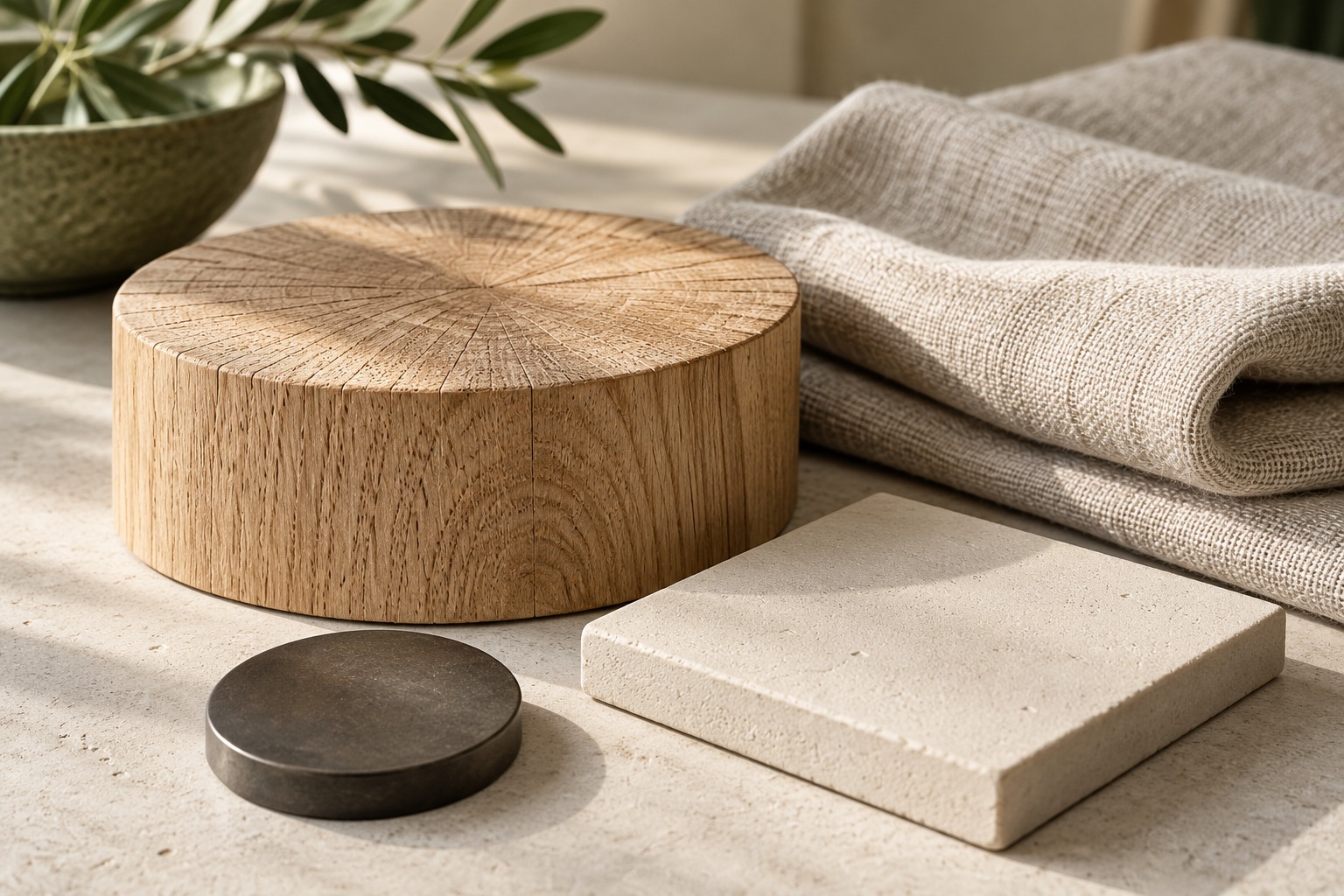
A material name is a starting point. It does not tell you everything about construction, surface treatment or care. Looking at those details separately makes it easier to compare furniture and understand what will suit your room.
Read the grain, then read the specification
Oak can have broad, expressive grain or a quieter appearance. Different boards will not look identical, even when they share a finish. Look at the full product description to understand which parts are solid timber and which use another construction. A photograph alone cannot establish that distinction.
When placing a new piece beside furniture you already own, think about the relationship between them rather than expecting an exact match. Compare warmth, grain scale and the amount of timber visible in the room. A deliberate difference can be calmer than two finishes that almost match.
Separate colour from texture
A woven fabric changes with the angle of the light. Look for close photographs that reveal the weave as well as wider photographs showing the silhouette. If a material reference is available, view it where the furniture will live and at different times of day.
Check the composition and care label for the exact item. Cover fabric, lining and filling may be different materials. A removable cover is not necessarily washable, and a natural-looking fabric is not proof of a particular fibre content.
Ask about the finish
A surface coating affects appearance and care. Do not assume that a treatment suitable for one oak table is right for another. Before using oil, polish or a cleaning product, identify the finish and consult the supplied instructions.
A useful comparison checklist
- What are the main materials and component materials?
- How is the piece constructed?
- What finish is applied to each surface?
- Which care instructions belong to this exact item?
- What natural variation should you expect?
Keep these answers alongside the dimensions when you compare pieces. A clear specification is as useful as a beautiful image. Continue with our materials and care guide, or explore the room collections to see how different textures work together.
The conversation
Have a useful idea or a question about this story? Join the conversation.