Fluid. Silky. Rich. Texture words help us imagine an object before we hold it, but they are only one part of a product description. A closer look begins by separating what a photograph shows from what the label tells us.
Notice the visible details
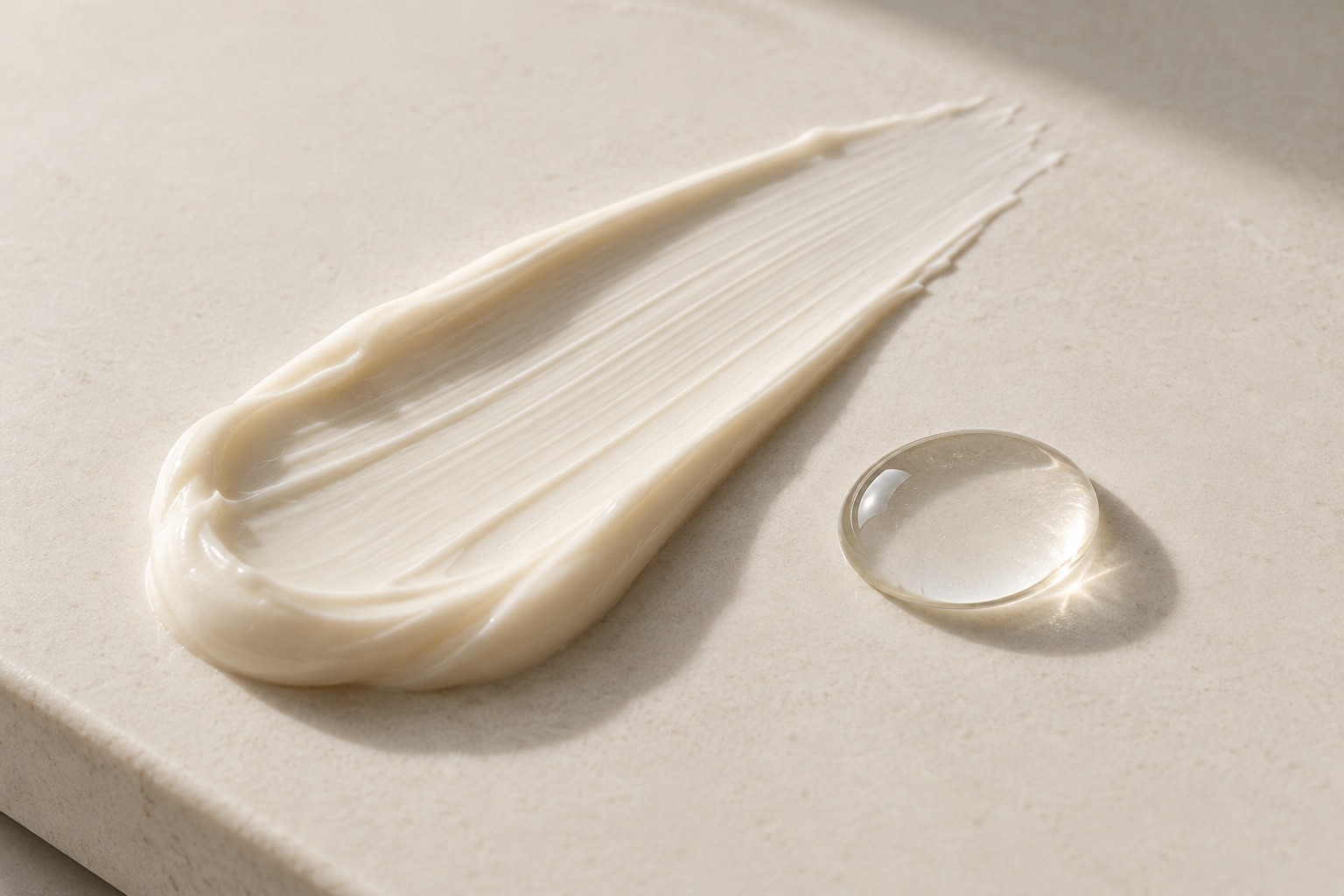
A cream swipe holds an edge. A clear droplet catches the light. These visual observations give a photograph its character. They do not establish the complete ingredients, suitability or performance of a finished product.
When comparing descriptions, look for concrete information alongside the expressive words: product format, available size, packaging and directions. Those details give the description a practical context.
Read the words together
A texture description is most useful beside the full product information. Read the label and precautions rather than making a choice from an image alone. Similar-looking products can have different directions.
A photograph invites a closer look. The product information carries the detail.
Ask a specific question
If a description leaves you uncertain, write down what is missing. Is it a packaging detail, an ingredient list or an instruction? A specific question gives customer care a clearer starting point than a broad assumption about what a product might do.
Our Ingredient Notebook explores the visual language of materials. Return to each product’s own label for its complete information.
The conversation
Be the first to add a thoughtful note.