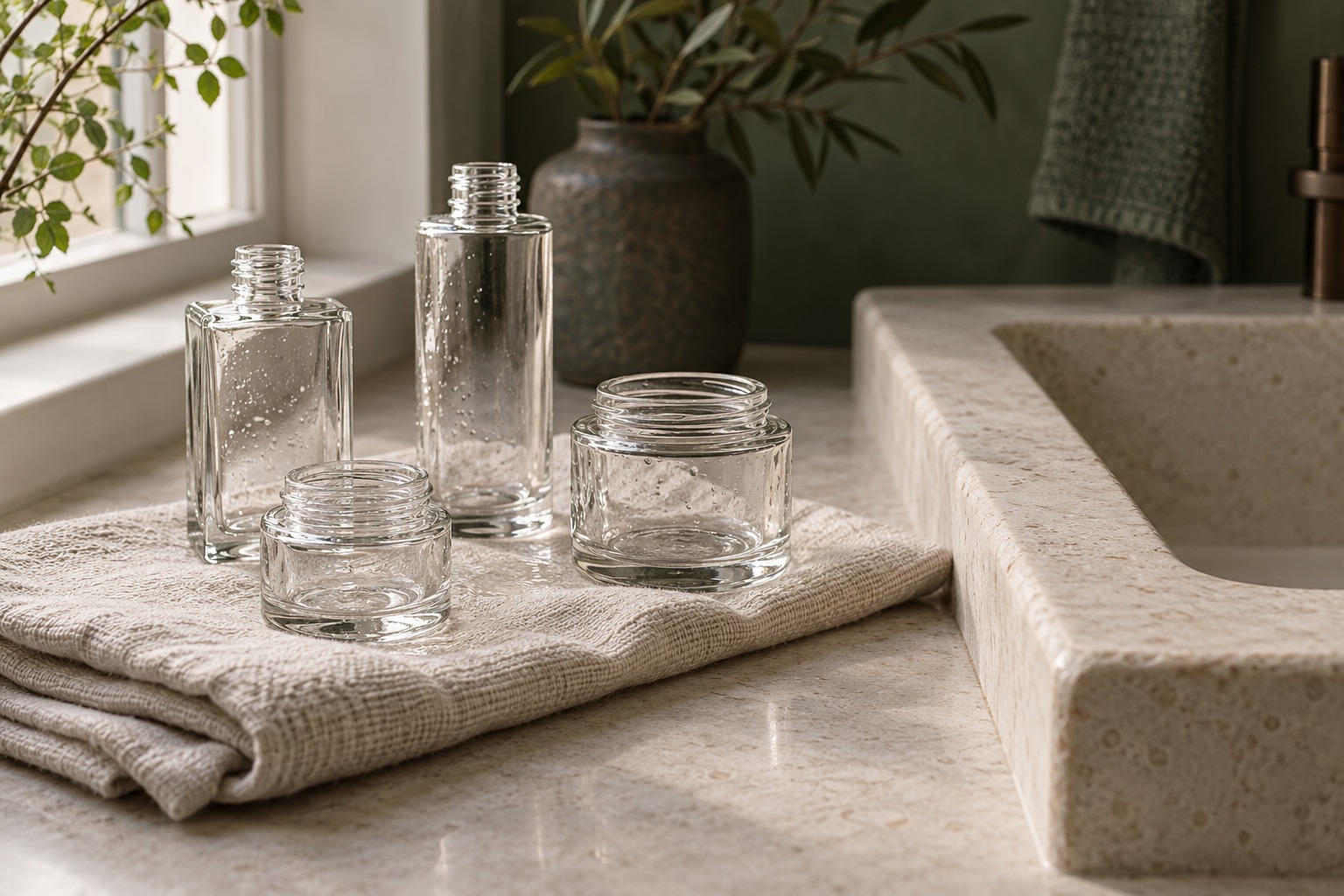
An empty container marks the end of one small routine. Before deciding what happens next, take a moment to look at the object itself. The bottle, cap, label and pump may not all be made from the same material or accepted in the same collection stream.
Keep the instructions close
Start with the packaging guidance supplied for the product. Then check the instructions from the collection service where you live. Acceptance can differ between places, so a general symbol or familiar material is not a guarantee that an item belongs in your local recycling bin.
If the instructions are unclear, set the item aside while you check. Guessing can be less useful than a short visit to your local service’s information page.
Look at the separate parts
A jar and its lid may need different handling. A pump may combine several materials. Separate components only when the relevant instructions ask you to do so, and do not force apart a mechanism that is not designed to come apart safely.
Prepare only as directed
Follow local guidance about emptying and cleaning containers. Avoid assuming that every package needs extensive washing or that every label must be removed. The collection instructions should tell you what preparation is useful.
Be thoughtful about reuse
A lovely jar may have another practical use, but consider the material, its condition and what it previously contained. Do not treat a cosmetic container as food-safe or suitable for storing a different formula without appropriate information. Keeping original product labels intact during use also prevents confusion.
The most useful habit is simple: pause, read and choose the next step based on the actual object. No universal claim can replace the guidance for your own collection service.
Return to the journal for more notes on everyday rituals and the objects around them.
In conversation
There are no comments yet. Share your thoughts below.