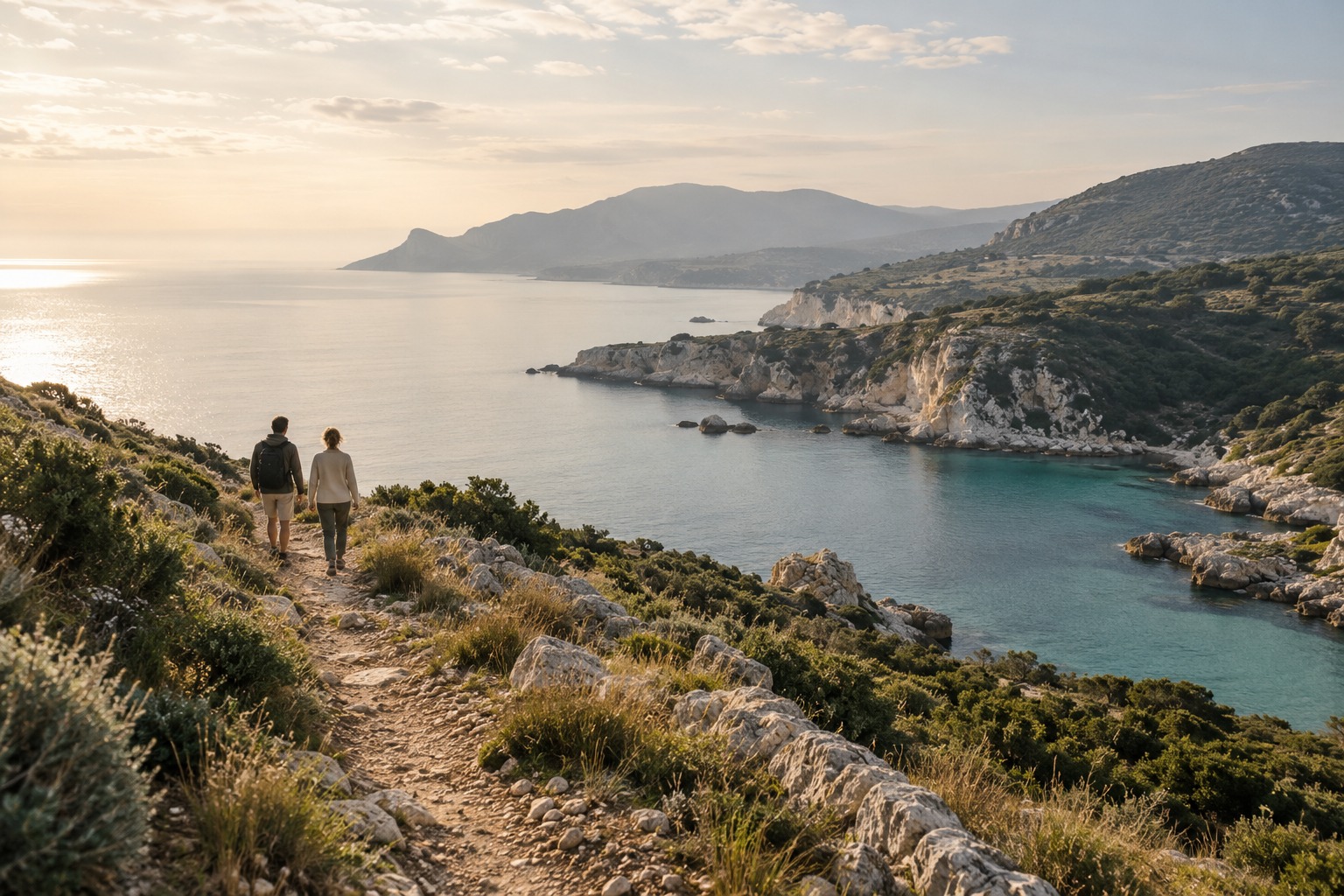
There is a particular pleasure in leaving space around a walk. Without a full afternoon of appointments, a bend in the path becomes an invitation rather than something to pass on the way elsewhere.
Begin by noticing
Look at the grasses nearest your feet before looking towards the horizon. Notice how the water changes colour under a cloud, how a sheltered corner sounds different from an exposed stretch. These small things give even a familiar route a different character.
Walking slowly need not mean walking far. A comfortable place to pause can be as much a destination as a viewpoint. Bring something warm to wear and give yourself permission to turn back when you have had enough.
Make a practical plan
A relaxed outing still begins with current information. Check the weather, route conditions and daylight. Ask about slopes, steps and surfaces if those details affect your choice. Carry water and choose footwear for the terrain.
The photograph offers a sense of the coast, rather than directions to a particular trail. Ask your host for a confirmed route before setting out.
Come back without a checklist
Perhaps you found a quiet bay. Perhaps you simply enjoyed the air. Either is a good reason to return to the house, put down your shoes and settle into the rest of the day.