THE SERVICE DIRECTORY
A clear route to better car care.
From a routine check to a concern that needs investigating, start with the area you would like us to look at. We assess the vehicle, explain our findings and ask for your approval before repair work begins.

01 / Diagnostics
A warning light or unfamiliar behaviour deserves a considered investigation. We record your concern, inspect the relevant systems and explain the next checks.
Typical scope: concern review, initial scan where appropriate and a written summary. Further testing is agreed separately.

02 / Brakes
Talk through a change in braking feel, a noise or a scheduled inspection. We document the condition of accessible components and discuss any proposed work.
Typical scope: visual inspection, wear observations and an itemized proposal. Replacement parts and additional labour require approval.

03 / Tires & wheels
Give everyday contact points some attention. We inspect tire condition and discuss wear, pressure and any further work suited to your vehicle.
Typical scope: condition and tread observations, pressure checks and recommendations. Tires, balancing and alignment are quoted separately.
04 / Routine maintenance
Build your next service around the vehicle, its records and the work actually due. Bring your service history so we can discuss a suitable scope.
Typical scope: records review, scheduled checks and agreed fluid or filter work. Parts specifications and total cost are confirmed before work.
05 / Climate & comfort
Describe changes in airflow, temperature or cabin comfort. An initial assessment helps establish which checks are appropriate before additional work is quoted.
Typical scope: controls and airflow review, accessible filter inspection and findings. Refrigerant work and replacement components are separate.
06 / Electrical checks
Intermittent accessories and starting concerns need context. Tell us when the problem occurs so we can agree a focused low-voltage investigation.
Typical scope: concern review and agreed battery, charging or circuit checks. Specialist high-voltage work is outside this service.
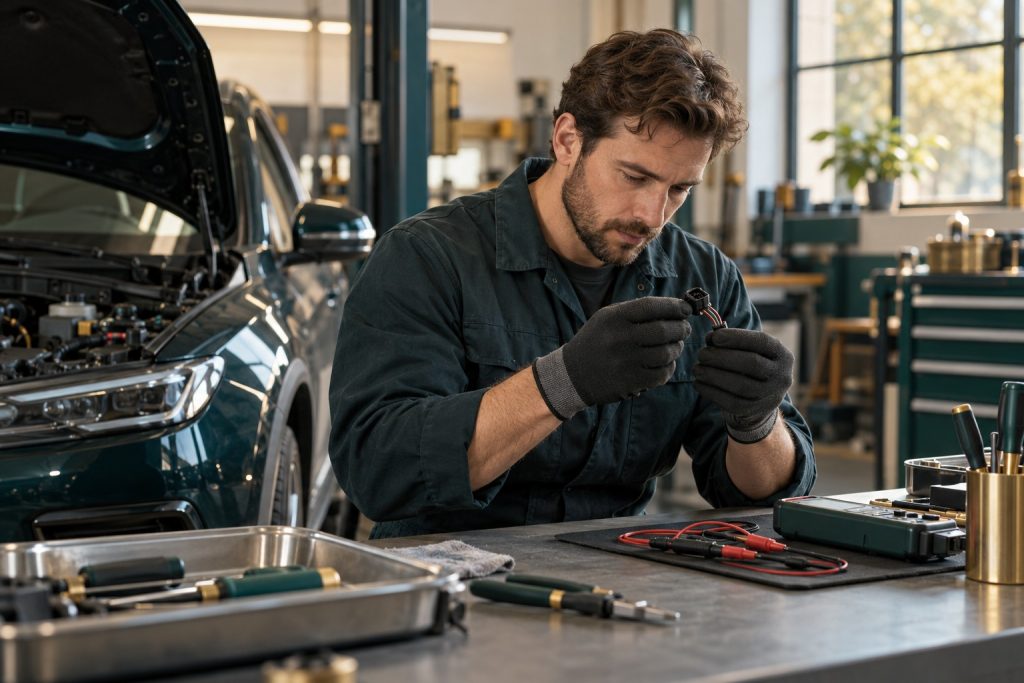
You don’t need to know the technical name.
Tell us what has changed, when you first noticed it and whether it happens all the time. Your description helps us plan an assessment; it does not establish a diagnosis.
Check vehicle coverage first
Include your make, model, year and engine type when you contact us. We confirm whether we can undertake the work before arranging your visit. Specialist equipment, parts availability and the nature of the concern can affect the scope.
From first conversation to collection.
- Describe the concern. Share vehicle details and your preferred visit time. A request is not a confirmed appointment.
- Agree the assessment. We confirm arrangements and explain the initial checks and any assessment fee.
- Approve the estimate. Review the findings, proposed work and costs. Changes need your approval.
- Collect with clarity. We explain the completed work and provide the relevant records for your next visit.