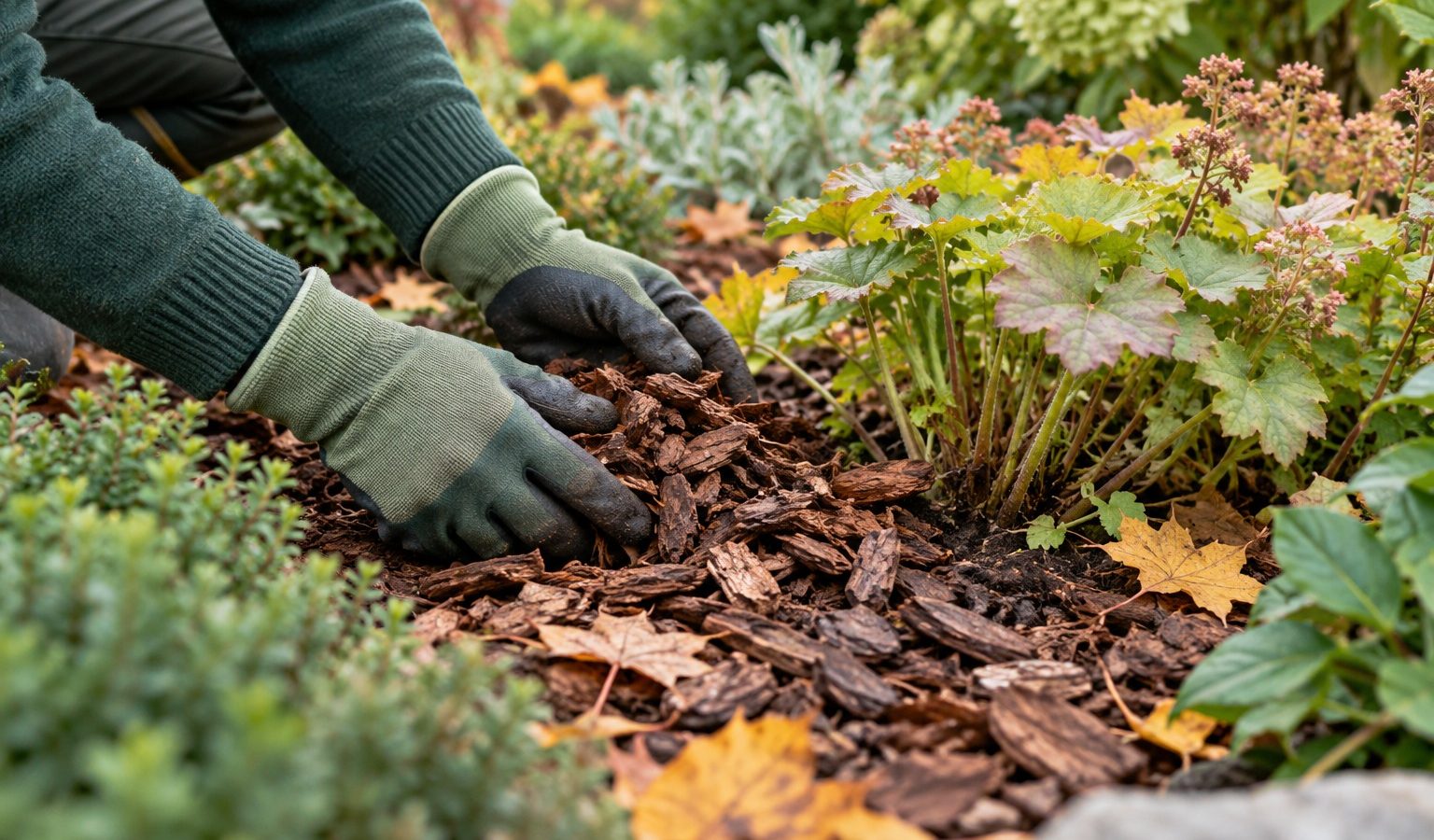
Autumn care begins with looking, rather than cutting. Some plants have finished their work for the year; others are only just revealing the shape of their seed heads. A border can be tidy enough to enjoy while still holding onto its seasonal texture.
Read the border first
Walk the garden after rain and notice where water gathers, which stems have collapsed across paths and where leaves have collected. Clear circulation routes first. Keep sound, upright stems where they add structure and remove damaged material with clean tools.
Give the soil attention
Remove persistent weeds before spreading mulch. Work when the soil is moist and workable, avoiding saturated ground. Keep mulch away from crowns and woody stems, and leave room to see how individual plants respond.
Make a planting record
Photograph gaps before the border dies back. Note plants that crowded their neighbours and combinations you want to repeat. These observations give spring decisions a useful foundation without requiring a complete redesign.
Keep the next visit simple
Write a short list: paths to clear, plants to check and areas to watch after heavy rain. Adapt pruning to each species rather than treating every perennial or shrub in the same way. If you are unsure of a plant’s identity, establish that before cutting.
The conversation