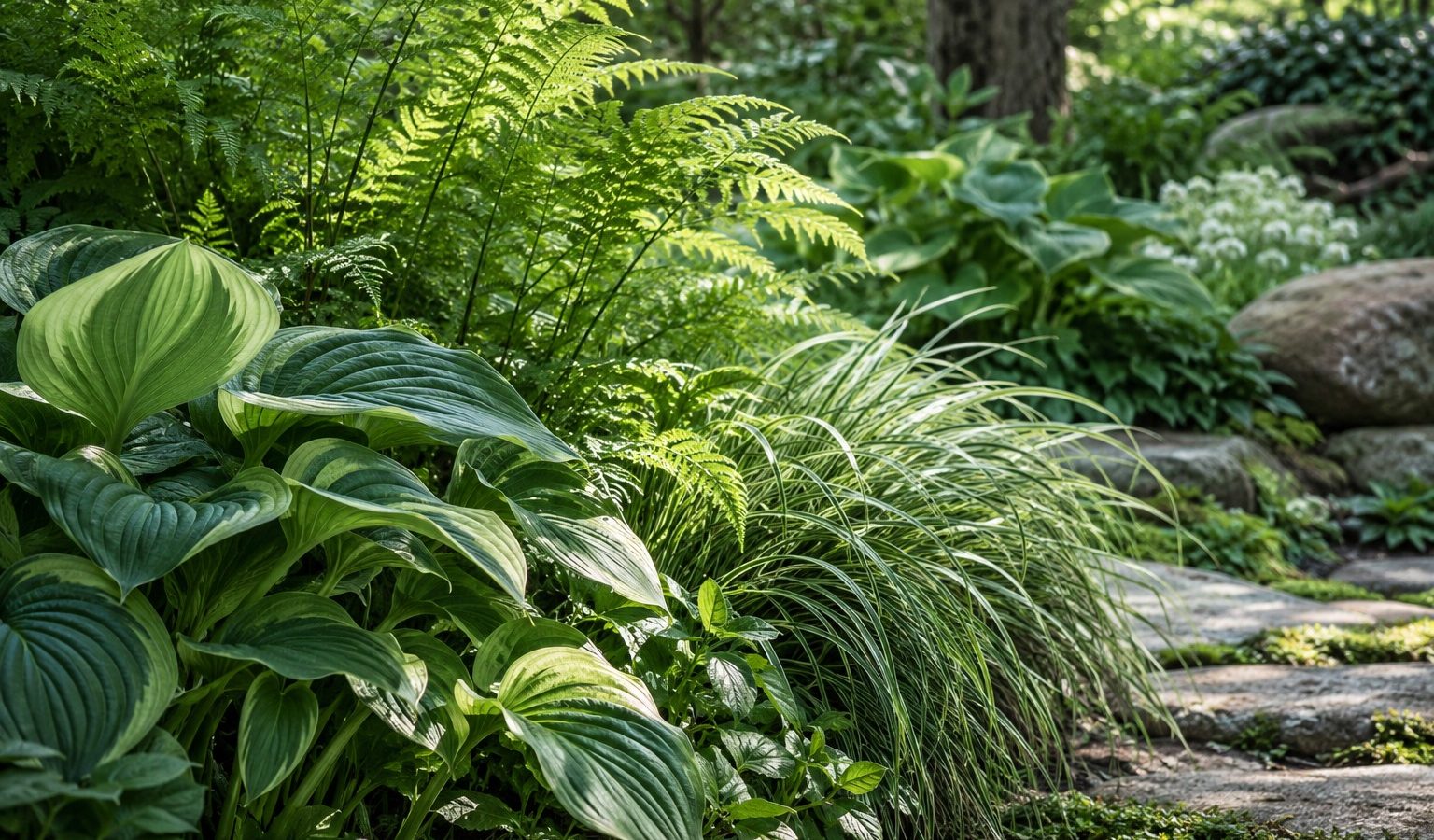
A memorable planting combination does not need every plant to flower at once. Leaf size, shape and surface can carry a border between flowering moments, giving it a quieter and more durable rhythm.
Start with the conditions
Observe the amount of light throughout the day, how freely the soil drains and the influence of nearby trees. A sheltered shady corner and a dry border under established roots may look similar, but ask different things of the plants placed there.
Choose a clear contrast
Pair a broad leaf with a finer texture, then repeat that relationship in small groups. Fern fronds can soften a large leaf; a suitable grass or sedge can introduce movement. Check the needs of individual species before treating a visual combination as a planting prescription.
Allow room for maturity
Small nursery plants leave inviting gaps, but the planting plan should account for their mature spread. Resist filling every space immediately. Use a sketch to record spacing and keep maintenance access in mind, particularly beside narrow paths.
Review through the year
Take photographs from the same viewpoint as the seasons change. Notice where the structure disappears, where foliage overwhelms a neighbour and which areas are most enjoyable from indoors. Adjust a few plants at a time so the border can evolve without losing its character.
The conversation