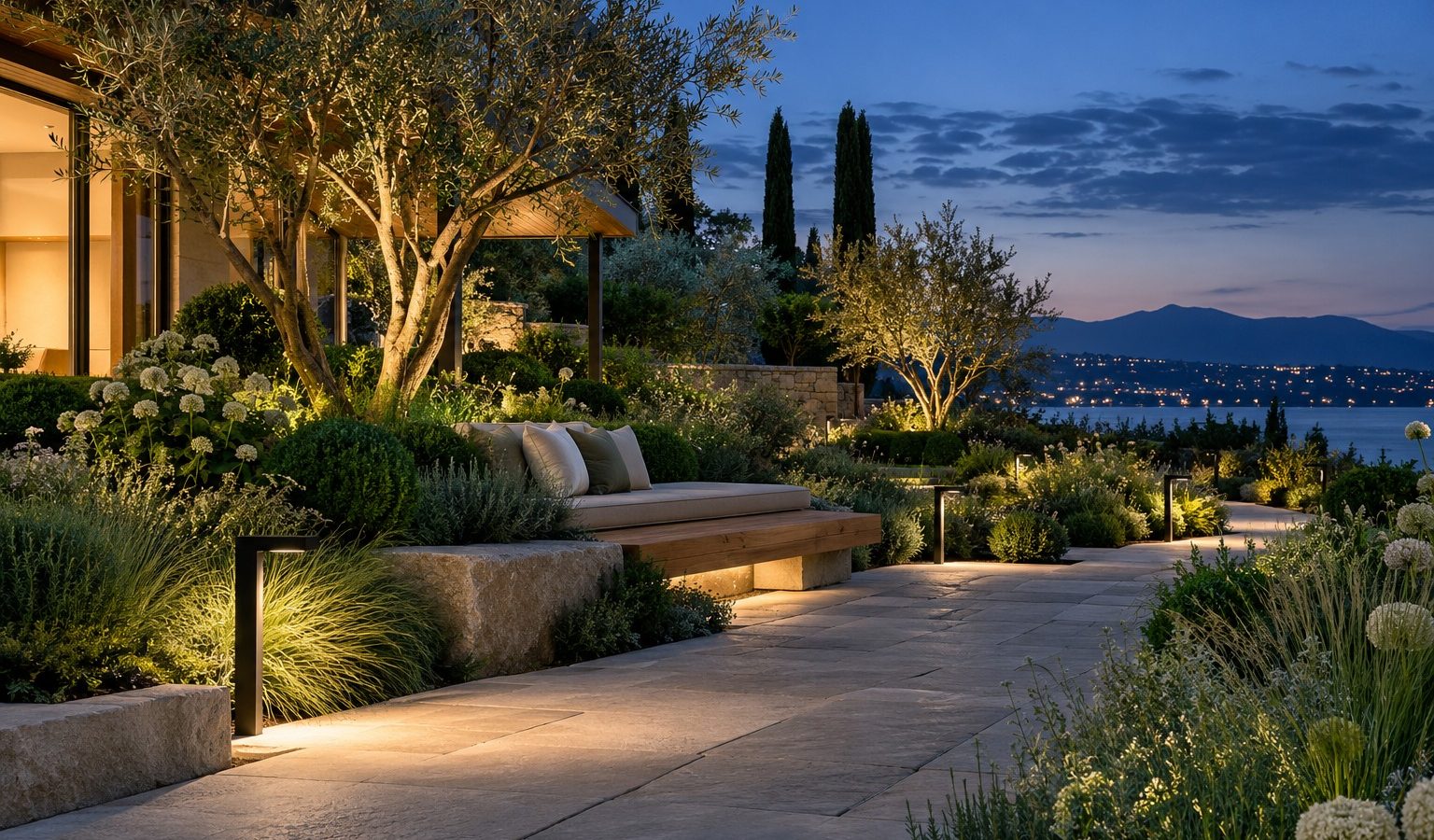
Good garden lighting begins with the places you need to see: a change in level, the route to a door and the edge of a seating area. Once those are understood, it becomes easier to leave the rest of the garden in comfortable darkness.
Follow the route
Walk the space at dusk and identify where the path becomes difficult to read. Consider how a light will appear from both directions and from neighbouring windows. Shielded fittings can help direct illumination towards the intended surface.
Choose a few moments
A single planting feature or the texture of a wall can be enough to create depth. Avoid lighting every tree and border simply because a cable can reach them. Darkness between lit areas is part of the composition.
Think about control
Discuss timers, switching and appropriate sensors with a qualified installer. Keep routine access lighting separate from occasional seating-area lighting where practical. Review the effect from inside the house as well as from the garden.
Plan before construction
Agree cable routes and access for maintenance before paving is installed. Outdoor electrical design and installation require competent professional advice, suitable equipment and compliance with local requirements. A landscape concept should clearly identify where that specialist input is needed.
The conversation