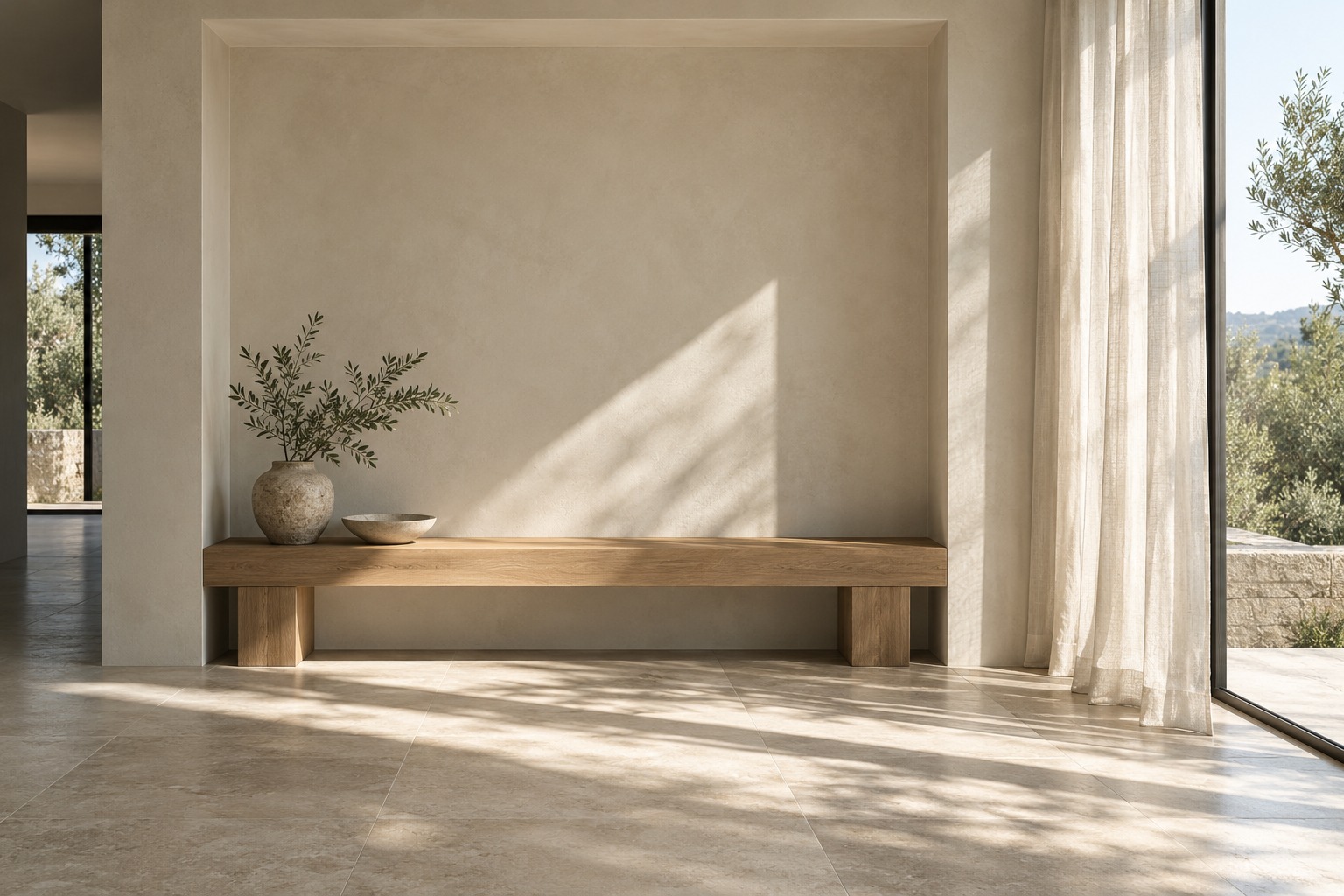
A room changes throughout the day, even when nothing in it moves. Light reveals the grain of a bench, softens the edge of a curtain and gives a quiet wall its own rhythm. Begin a design by observing these changes before choosing finishes.
Spend a day with the room
Look at the space in the morning, around the middle of the day and toward evening. Note which areas feel bright, which remain shaded and where reflections become uncomfortable. Photographs help you compare moments, but your experience in the room matters more than a camera’s automatic exposure.
Record the activities that already happen in each place. A bright corner may be pleasant for breakfast but difficult for a screen. A shaded alcove may become a comfortable reading spot with a carefully placed lamp.
Test surfaces where they will live
Place paint, timber and textile samples near their intended positions. Examine vertical samples vertically and floor samples on the floor. Move them between daylight and the lamps you expect to use. A finish that looks warm on a sample board may feel quite different beside a large window.
Choose the atmosphere you want to live with, then ask the materials to support it.
Make room for adjustment
Sheer curtains can soften direct light without making the window disappear. Separate task lighting from ambient lighting so reading and conversation do not depend on the same setting. Keep furniture arrangements flexible until you have experienced the space at different times.
A simple observation list
- Where does direct sunlight fall?
- Which surfaces produce glare?
- Where do you naturally choose to sit?
- Which activities need their own light?
These observations turn an abstract mood into a practical brief. For a wider view of the design process, explore our services.
Editorial demo content with an illustrative photograph.
Join the conversation