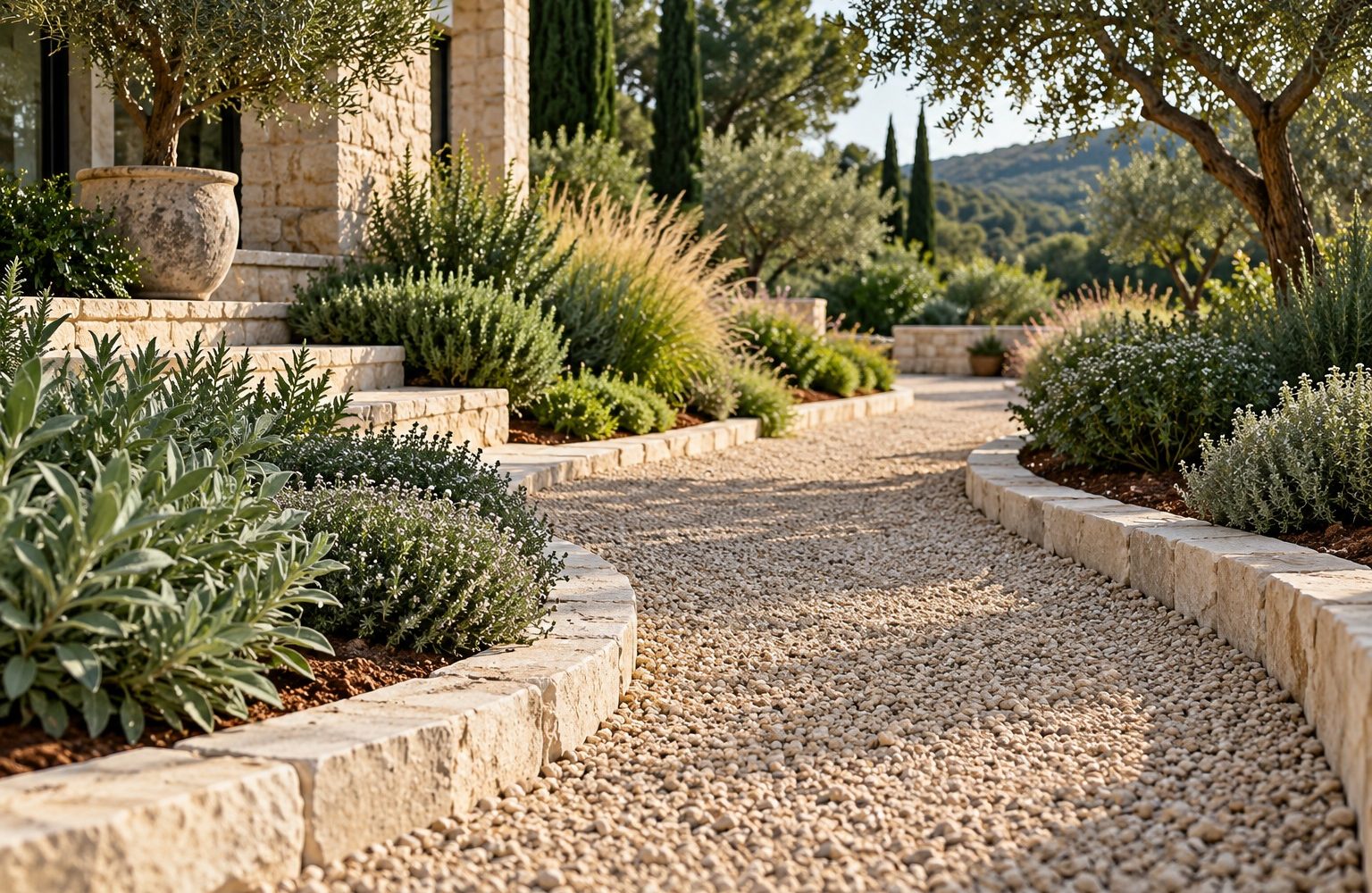
A path is more than the space between planting beds. It sets the pace of a garden, connects its useful places and determines how comfortably we can move through it.
Follow the everyday journey
Begin with the routes you use most: the kitchen door to the table, the gate to the shed, the hose to the far border. A beautiful detour can be rewarding, but the practical routes should still feel natural.
Try marking the proposed edges on the ground before selecting a material. Walk the route carrying the things you normally carry. Check turning space, thresholds and the relationship between doors and nearby planting.
Consider the whole surface
Gravel can offer a pleasing texture, but the finished performance depends on the ground beneath it, its containment and the way it meets other surfaces. Loose materials may not suit every mobility need. Discuss access requirements and drainage with the designer before specifying the build-up.
| Consideration | Question |
|---|---|
| Access | Who will use the route, and with what equipment? |
| Water | Where does runoff go during heavy rain? |
| Edges | How will the surface meet soil, lawn and thresholds? |
| Care | What routine attention will keep it usable? |
Keep the palette restrained
Look at the house, boundary walls and existing garden features. A small selection of compatible materials often creates a more settled result than a different finish for every area. View physical samples outside, in both wet and dry conditions.
Resolve the details early
Levels, steps and drainage need to work together. Seek appropriate technical advice for the site before construction. The quietest-looking detail is often the one that has received the most careful thought.
Explore the courtyard garden for an example of a restrained material palette.