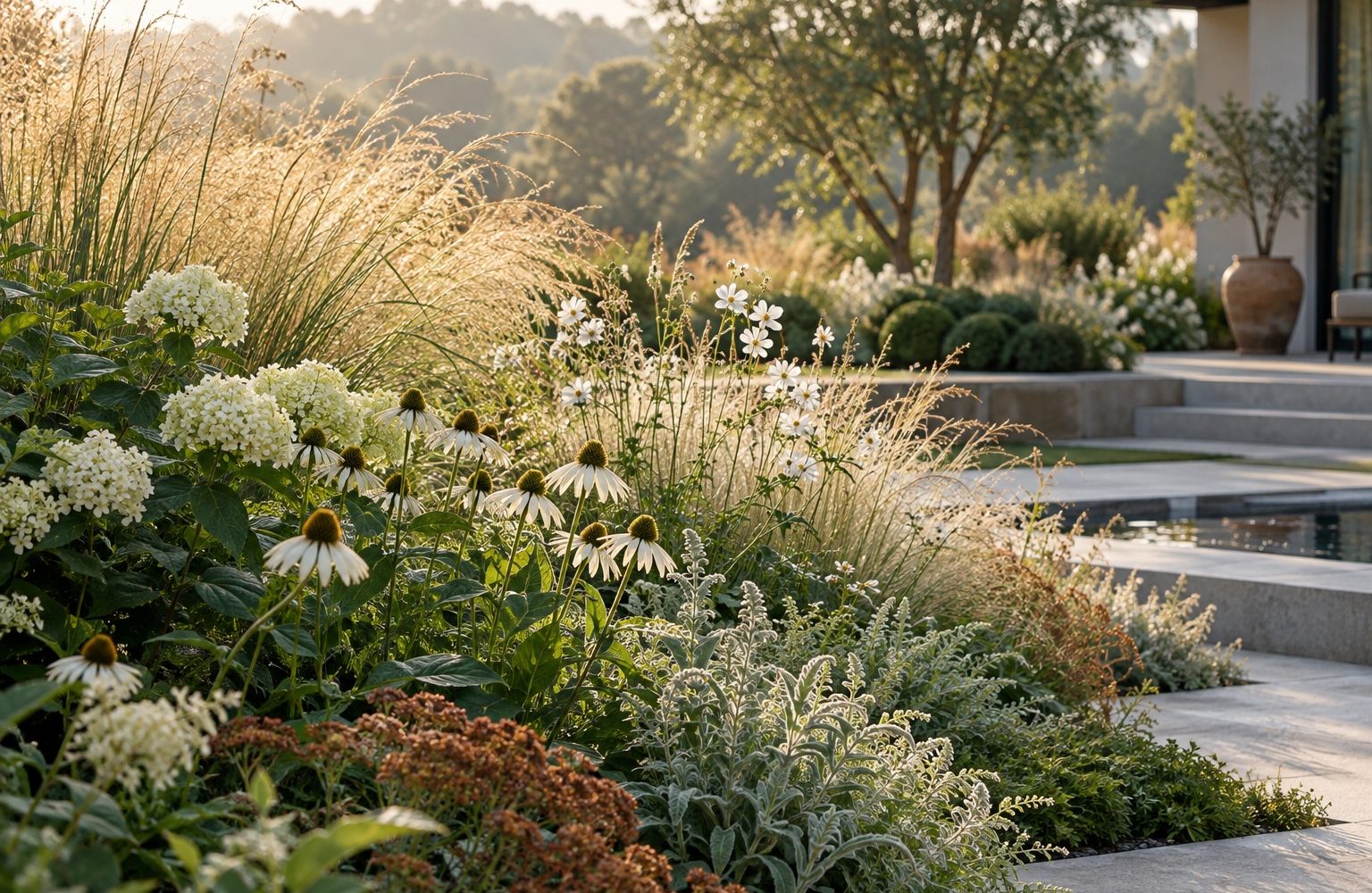
A planting scheme begins with relationships. The shape of a leaf matters alongside its neighbour; the space beneath a tree matters as much as the canopy above it. Thinking in layers helps us bring these relationships into focus.
Start with the lasting structure
Look first at the trees, shrubs and boundaries already present. They shape the light and give the garden its underlying rhythm. A new border should respond to that framework, rather than conceal it behind a collection of unrelated plants.
Sketch the broad outlines before choosing individual flowers. Where would a light canopy soften a view? Where should a low planting layer keep a route open? Leave enough space for mature growth and access for care.
Make room for movement
Perennials and grasses bring a different pace to the garden. Some hold a strong shape; others allow glimpses through their stems. Repeating a few compatible forms can make a mixed border feel connected without making every part identical.
Think of the spaces between plants as part of the composition, especially while a new border establishes.
Read the conditions
Observe sunlight, shelter and soil moisture across the site. A plant chosen for its appearance alone may struggle if the conditions do not suit it. Match the palette to the place, and ask a horticultural specialist when the soil or exposure is uncertain.
- Record where shade falls through the day.
- Notice where water collects after rain.
- Consider the mature spread of every structural plant.
- Keep maintenance routes accessible.
Let the seasons contribute
A border does not need to look the same all year. Emerging leaves, flowers, seedheads and bare stems each have their moment. Plan for those changes and leave space to learn from the first growing season.
Explore our approach to planting design, or tell us about your garden.